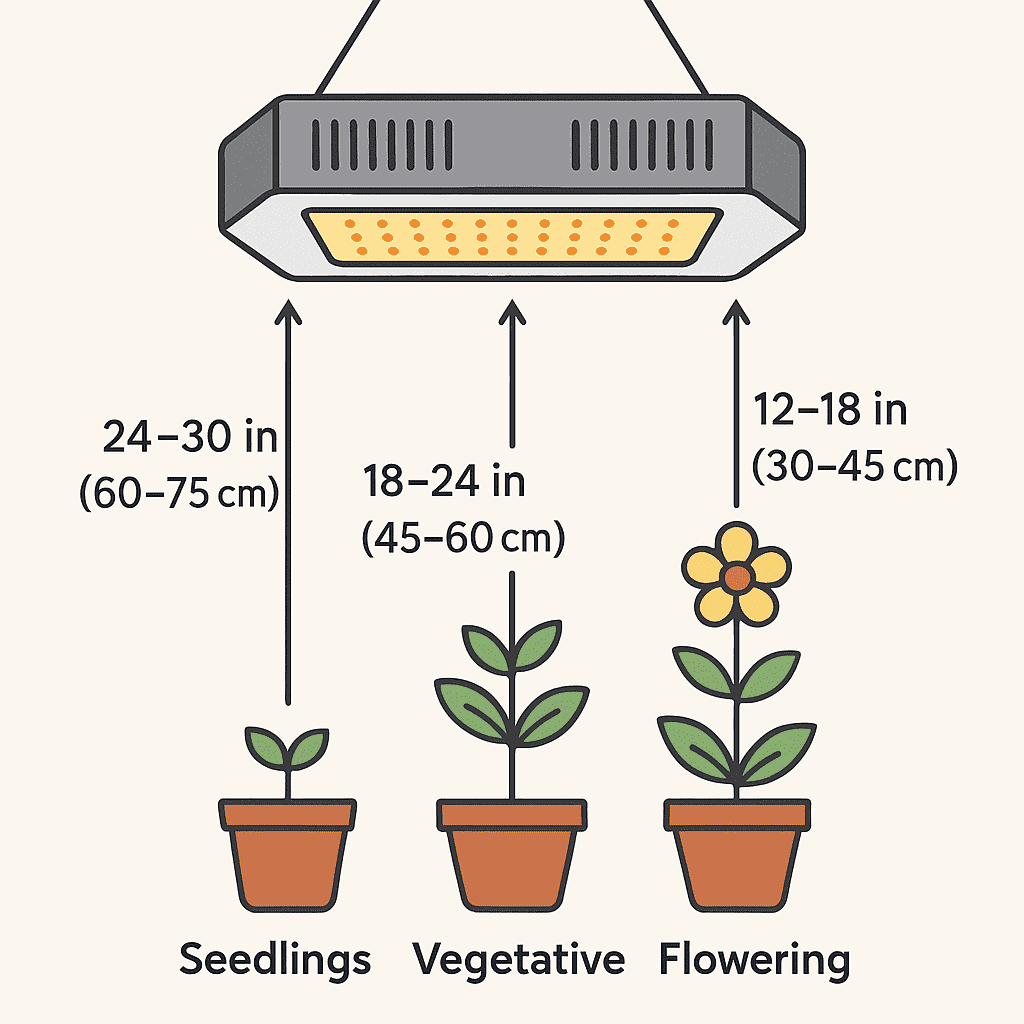
Confused by grow light distance? Learn exactly how close should grow lights be to plants to maximize growth and prevent leaf burn.
How Close Should Grow Lights Be to Plants? The Ultimate Distance Guide for Indoor Gardeners
Let’s be entirely real for a second: the day you decide to buy your very first grow light is a massive milestone as a plant parent. You open the box, screw in the full-spectrum bulb or mount the sleek LED panels over your shelves, and step back to admire your new, high-tech indoor greenhouse. It feels amazing. You are officially ready to rescue your tropical houseplants from those gloomy winter afternoons or that dim, north-facing window.
But almost immediately, a wave of anxiety hits you. You find yourself standing over your plants, adjusting the height of the fixture up and down, completely stumped by a critical question. How close should grow lights be to plants? If you place the bulb right up against the leaves, are you going to accidentally roast your favorite monstera clone? But if you hang it way up by the ceiling, is your succulent collection going to starve for energy and stretch out anyway?
Look, I get it, plant care can be frustrating but trying to figure out the exact sweet spot for your grow lights shouldn’t feel like a high-stakes guessing game. Hanging your lights at the wrong distance is one of the quickest ways to either stunt your plant’s growth or cause irreversible leaf bleaching.
Today, we are going to strip away the confusing engineering metrics and give you the definitive, expert-led breakdown on grow light spatial layouts. Here at LeafCare.xyz, we believe that mastering indoor lighting should be stress-free, straightforward, and accessible to everyone. Let’s dive right into the real talk on how to calculate the perfect distance for a gorgeous, thriving home jungle.
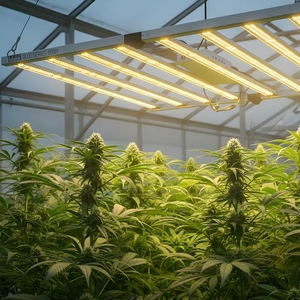
The Science of Light Distance: Why a Few Inches Matter
To understand how close should grow lights be to plants, we need to talk about a fundamental rule of physics called the Inverse-Square Law. Don’t worry—you don’t need a math degree to get this. In simple terms, this law states that the intensity of light drops off drastically the further it travels from the bulb.
If you double the distance between your grow light and your plant’s canopy, the light intensity doesn’t just cut in half. It actually drops to one-quarter of its original strength. This means a light that is highly effective at 12 inches away becomes almost entirely useless if you move it up to 24 inches.
Conversely, moving a light just a few inches closer can dramatically increase the energy your plant receives. The trick is balancing this energy boost with the physical limitations of your light source. Different types of bulbs emit different amounts of ambient heat and raw radiation, meaning the ideal distance shifts depending on the specific technology you are using.
Grow Light Distance Guidelines by Bulb Type
To keep your setup simple and safe, here is a quick reference table showing general distance recommendations based on the type of grow light technology you have at home.
| Grow Light Technology | Average Heat Output | Recommended Distance for High-Light Plants (e.g., Succulents) | Recommended Distance for Medium-Light Plants (e.g., Monsteras) | Recommended Distance for Low-Light Plants (e.g., Pothos) |
| Modern LED Bulbs / Bars | Very Low | 6 to 12 inches | 12 to 18 inches | 18 to 24 inches |
| Fluorescent Tubes (CFL / T5) | Low to Medium | 3 to 6 inches | 6 to 12 inches | 12 to 18 inches |
| High-Intensity Discharge (HID) | Extremely High | 12 to 24 inches | 24 to 36 inches | 36+ inches (Not recommended) |
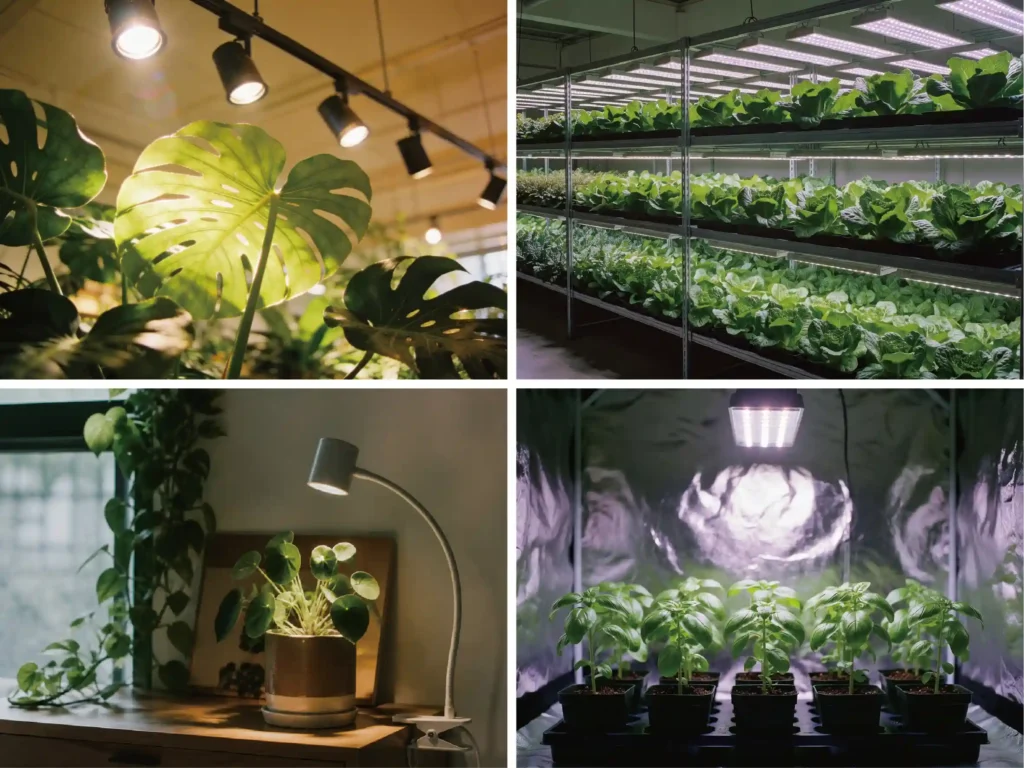
Breaking Down the Three Major Grow Light Types
Here is the real talk: your light’s physical design dictates exactly where it needs to sit on your plant shelves. Let’s look at the three most common setups used by modern plant parents today.
1. Modern Full-Spectrum LEDs
LEDs are the absolute undisputed champions for indoor plant parents. They are highly efficient, come in beautiful designs, and emit almost zero radiant heat from the front of the bulb. Because they run so cool, you can position them surprisingly close to your plants without any risk of thermal burning. However, high-end LEDs can still cause “photo-bleaching” if your close enough to overwhelm the leaf cells with pure radiation, so you still need to respect minimum distances.
2. Fluorescent Lights (T5 Tubes and CFLs)
If you are using classic long fluorescent tubes or compact fluorescent screw-in bulbs, you are working with an incredibly gentle light source. Fluorescents emit a very soft intensity that spreads out evenly. Because their raw power is lower, you actually have to place them incredibly close to your plants—often just a few inches away—for the leaves to register the energy. They are fantastic for propagation shelves, seed starting, and micro-greens.
3. High-Intensity Discharge (HID) Bulbs
HIDs are the heavy-duty, commercial-grade bulbs typically used for large-scale indoor farming or vegetable cultivation. They output a staggering amount of light, but they also run hot enough to fry an egg. If you hang an HID light too close, it will cook your tropical plants in minutes. These must always be kept several feet away from your plants and usually require dedicated ventilation fans to manage the room temperature.
Step-by-Step Guide: How to Find the Perfect Distance for Your Setup
Ready to hang your lights like a seasoned professional? Follow this foolproof step-by-step proccess to dial in the perfect distance for your unique collection.
Step 1: Identify Your Plant’s Light Profile
Before moving your fixtures, look up the native habitat of the plant your lighting. Desert dwellers like cacti, echeverias, and indoor herbs need intense energy, so they require the closest placement. Tropical understory plants like philodendrons, monsteras, and hoyas prefer medium intensity. True low-light plants like snake plants, ZZ plants, and peace lilies require the furthest placement.
Step 2: Use the “Hand Test” for Heat Check
Once your light is turned on, place your hand directly over the top leaves of your plant with your palm facing up toward the bulb. Hold it there for 30 seconds. If you feel any distinct warmth radiating onto your skin, the light is sitting too close and the heat will eventually dry out and scorch your foliage. Raise the light up until the air at the leaf line feels completely cool.
Step 3: Measure and Adjust the Hanging Height
Using a tape measure, set your initial baseline distance based on our guide table. For a standard 20W to 40W full-spectrum LED grow bulb focusing on a tropical plant, a distance of 14 inches from the top leaf is an excellent, safe starting point.
Step 4: Automate the Daily Schedule
Light intensity and light duration go hand-in-hand. If you are placing your grow lights a bit further away to protect a sensitive plant, you can compensate by keeping the lights turned on for a longer duration—around 14 to 16 hours. If your light is positioned close, a 12-hour daily cycle is usually perfect. Always use a digital plug timer to keep the schedule perfectly consistent.
Step 5: Observe and Tweak Over Two Weeks
Your plants are living indicators of your lighting success. Leave your lights at the chosen height for two full weeks and watch the new leaves emerge. If the growth is tight, vibrant, and structurally strong, you have nailed the sweet spot. If you notice signs of stress, use the troubleshooting cues below to make minor adjustments.
How to Read Your Plant’s Lighting Body Language
Even when you follow the instructions perfectly, every home environment has different humidity levels and ambient temperatures that can alter how a plant processes light. You need to keep an eye out for the physical warnings your plants display.
Signs Your Grow Light Is Too Close
If your artificial sun is overpowering your plants, they will display clear signs of solar distress:
- Bleached, White Patches: The center of the leaves directly beneath the bulb will turn a ghostly white or light tan color as the intense radiation destroys the green chlorophyll cells.
- Crispy, Downward-Curling Edges: The plant will curl its leaves downward or roll them into tight tubes to try and hide its surface area from the intense light rays.
- Washed-Out, Faded Color: Vibrant dark green leaves will start looking pale, chartreuse, or matte yellow-gray as they struggle with light stress.
Signs Your Grow Light Is Too Far Away
If your light is hung too high, your plant will enter a state of panic trying to reach the energy source:
- Leggy, Spindly Growth: The stems become thin, weak, and elongated, with massive spaces between individual leaves as the plant stretches upward.
- Severe Leaning: The entire plant will visibly bend at a sharp angle toward the bulb instead of growing straight and structurally sound.
- Loss of Variegation: Beautiful white or pink patterns on rare plants will turn solid green because the plant is desperately trying to produce more chlorophyll to catch what little light is hitting its surface.
Your Go-To Partner for a Confident, Thriving Indoor Jungle
Figuring out how close should grow lights be to plants doesn’t require expensive luxury gear or an advanced degree in botanical physics. Once you understand that lighting distance is simply a balance between your specific bulb type and your plant’s natural family traits, you can confidently turn any dark room, bookshelf, or basement into a flourishing green paradise.
Be patient with your indoor garden as you adjust their setups. Make minor changes of just two to three inches at a time, give your plants a week to respond, and keep your watering habits aligned with their new, active growth rates.
Whenever you face an indoor gardening challenge or want to upgrade your layout, remember that LeafCare.xyz is always your ultimate, go-to resource for practical, expert-led advice to keep your home spaces alive and thriving.
Are you setting up grow lights for your plant shelves this week, or are you trying to figure out if your current light height is causing bleached leaves? We want to help you design the perfect layout! Drop a comment down below with your specific light wattage and plant types, or subscribe to our weekly newsletter for the freshest, most actionable indoor plant secrets delivered straight to your inbox every single week!
