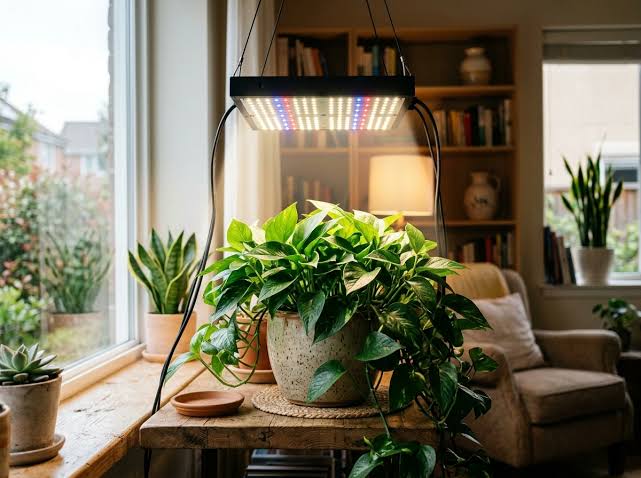
Confused by grow lights? Learn exactly how much artificial light do indoor plants need to thrive, from light intensity to daily schedules.
How Much Artificial Light Do Indoor Plants Need? The Ultimate Grow Light Guide
Let’s be completely honest for a second: trying to understand plant lighting can make you feel like you are studying for a university physics exam. You buy a gorgeous new grow light setup from Amazon, open the manual, and instantly find yourself buried in confusing technical acronyms like PPFD, Lux, Kelvins, and Lumens. You just wanted to keep your favorite fiddle leaf fig or expensive monstera clone alive in your dark basement apartment, but instead, you are staring at a bulb wondering if you are about to accidentally fry your plants or starve them of light.
Look, I get it, plant care can be frustrating but you don’t need a degree in lighting engineering to build a gorgeous urban jungle. If your windows are small, blocked by neighboring buildings, or you are trying to survive a gloomy winter season, artificial lighting is an absolute game-changer. It gives you total control over your indoor environment, freeing you from the limitations of your home’s layout.
But the million-dollar question always remains: how much artificial light do indoor plants need to actually thrive? Today, we are stripping away the complex botanical jargon to give you the real talk on artificial lighting. We will break down exactly how long to keep your lights on, how close to place them, and how to read your plants’ behavior. Here at LeafCare.xyz, we are dedicated to helping indoor plant parents grow a thriving green space at home without the stress. Let’s make grow lights simple once and for all.
The Science of Artificial Light: Why Regular Bulbs Don’t Cut It
Before we jump into schedules and distances, we need a quick reality check on what light actually is to a plant. Plants don’t see light the way human eyes do. While a standard yellow incandescent bulb in your living room lamp looks perfectly bright to you, to your plants, it is essentially total darkness.
Plants rely on specific wavelengths of light within the visible spectrum to power photosynthesis—the biological proccess where they convert light energy into fuel. This specific range is called Photosynthetically Active Radiation (PAR). Within this spectrum, plants mainly crave blue light (which fuels compact, leafy, vegetative growth) and red light (which triggers flowering, fruit production, and deep root development).
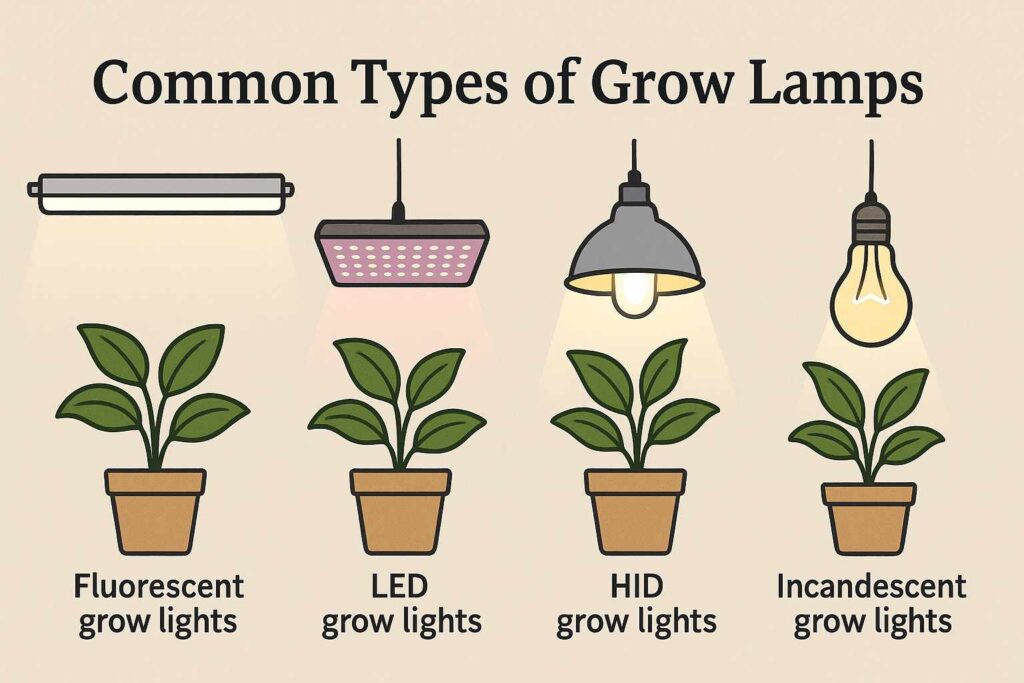
Modern LED grow lights are specifically engineered to pump out massive amounts of these exact red and blue wavelengths. This is why investing in dedicated grow lights—whether they are sleek white full-spectrum bulbs or those futuristic purple panels—is essential if you want to replace natural sunlight entirely.
Artificial Light Requirements By Plant Type
Not all houseplants are created equal. A desert succulent has vastly different energy needs than a tropical fern living under a dense rainforest canopy. To keep your shopping and setup simple, here is a breakdown table of how much artificial light do indoor plants need based on their specific plant family.
| Plant Category | Examples | Daily Duration (Hours) | Foot-Candles Required | Ideal Light Distance (LED) |
| Low Light Needs | Pothos, Snake Plant, ZZ Plant, Cast Iron Plant | 10 to 12 Hours | 50 – 150 FC | 18 to 24 inches away |
| Medium Light Needs | Monstera, Calathea, Ficus, Philodendron | 12 to 14 Hours | 150 – 500 FC | 12 to 18 inches away |
| High Light Needs | Succulents, Cacti, Fiddle Leaf Fig, Citrus, Herbs | 14 to 16 Hours | 500+ FC | 6 to 12 inches away |
The Two Golden Variables: Intensity vs. Duration
When figuring out how much artificial light do indoor plants need, you have to balance two main factors: how strong the light is (intensity) and how long it stays on (duration). Think of it like a battery. A plant needs a specific total daily dose of light energy to fill its metabolic battery every day. You can give it a high-intensity blast for a shorter period, or a lower-intensity glow for a longer period.
Understanding Light Intensity (The Distance Factor)
Light intensity drops off drastically the further away the bulb is from the leaves. This is due to the inverse-square law, which means if you double the distance between your grow light and your plant, your plant only receives one-quarter of the light energy. If your light is too far away, your plants will become leggy and stretched out as they desperately try to grow closer to the energy source. If it is too close, the heat or intense energy can bleach the leaves or cause crispy brown burn spots.
Understanding Daily Duration (Why Plants Need Sleep)
Here is the real talk: never leave your grow lights on 24 hours a day. It can be tempting to think that more light equals faster growth, but plants actually need a period of darkness to complete their respiratory cycle. During the “night,” plants stop photosynthesizing and begin breaking down the sugars they generated during the day to fuel new root and cellular growth. Leaving your lights on constantly will eventually exhaust your plant, leading to stunted growth and pale foliage.
Step-by-Step Guide: How to Setup Your Artificial Light System Correctly
Ready to set up your indoor grow space? Follow this foolproof step-by-step method to ensure your green babies get the exact amount of light they need without any accidental damage.
Step 1: Group Your Plants by Light Needs
Don’t mix a desert cactus with a moisture-loving calathea under the exact same high-powered light panel. Group your high-light lovers together on one shelf or table, and your low-light tolerant varieties on another. This allows you to tailor your light setups perfectly.
Step 2: Choose the Right Grow Light Spectrum
For general houseplants, always look for bulbs labeled “Full Spectrum” or “Daylight Balanced.” These emit a clean, white light that mimics natural sunshine. They look beautiful in your living space and provide a balanced blend of blue and red wavelengths that keep your plants structurally sound and vibrant.
Step 3: Set Your Initial Hanging Distance
As a general starting rule for modern, low-heat LED grow lights, hang the bulb about 12 to 18 inches above the top leaves of your medium-light plants (like monsteras or philodendrons). If you are growing succulents or indoor herbs, drop the light closer—around 6 to 10 inches away.
Step 4: Automate Your Schedule with a Timer
Do not rely on your own memory to flip the switches every day. Consistency is absolutely everything to a plant. Buy a cheap mechanical or smart plug timer and program it to turn your grow lights on and off at the exact same time every day. Aim for a baseline of 12 to 14 hours of continuous light for standard tropical houseplants.
Step 5: Monitor and Adjust Based on Behavior
Your plants are the ultimate indicators of success. Leave your setup running for two weeks and watch how the leaves respond. If your plant is growing tight, compact new leaves with vibrant colors, you’re setup is perfect. If it looks stressed, use the troubleshooting steps below to adjust your heights.
How to Read Your Plant’s Lighting Body Language
Even when you follow all the charts perfectly, every home environment is slightly different. You need to keep an eye out for the subtle physical cues your plants give you when their artificial lighting isn’t quite right.
Signs Your Plant Needs More Light
If your artificial light system isn’t powerful enough or isn’t running long enough, your plant will enter a state of panic. Look out for these warnings:
- Leggy, Stretched Stems: The spaces between individual leaves (internodes) become long, thin, and spindly as the plant races toward the light.
- Reaching or Leaning: The entire plant visibly bends at a sharp angle toward the artificial bulb.
- Loss of Variegation: Gorgeous white, cream, or pink patterns on plants like the Marble Queen pothos will fade back to solid green because the plant desperately needs more chlorophyll to capture what little light is available.
- Abnormally Small New Leaves: The newest leaves look like miniatures compared to the mature foliage.
Signs Your Plant Is Getting Too Much Light
Yes, you can absolutely overdo it with grow lights, especially with high-output panels. Watch out for these indicators that your plant is burning:
- Bleached or Faded Foliage: The leaves look washed out, pale, or lose their rich green depth, turning an unnatural dull gray or yellow-white.
- Crispy Brown Tips and Edges: The leaves dry out rapidly starting from the edges, even though your soil moisture level is perfectly fine.
- Downward Curling Leaves: The plant will fold its leaves downward or turn them sideways to reduce the total surface area exposed to the intense light rays.
Cultivating Your Dream Indoor Oasis
Figuring out how much artificial light do indoor plants need doesn’t have to be an overwhelming chore. Once you realize that lighting is just a combination of intensity and a steady daily routine, you can bring green life into any room of your home, regardless of how dark it is outside. Your grow lights are simply your tools to create a reliable, year-round growing season.
Be patient with your plants as they adapt to their new artificial suns. Give them a few weeks to adjust, keep your watering habits aligned with their growth rate, and don’t forget to clean your bulbs occasionally so dust doesn’t block the light output.
Whenever you run into a confusing care issue or want to expand your collection, LeafCare.xyz is always your reliable, go-to resource for straightforward, expert advice to help you build a stunning home space.
Are you planning to install grow lights for your plants this season, or are you trying to troubleshoot a specific shelf setup right now? We want to help you design it perfectly! Drop a comment down below with your plant types and lighting details, or subscribe to our weekly newsletter for the absolute best indoor gardening tips and tricks delivered straight to your inbox every single week!
