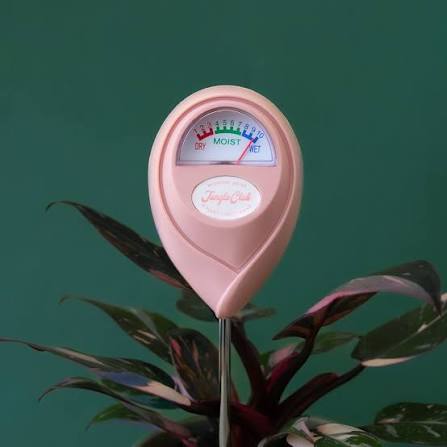
Are you tired of guessing when to water your houseplants? Discover the best moisture meter for indoor plants and save your green babies from root rot.
The Best Moisture Meter for Indoor Plants: Take the Guesswork Out of Watering
Look, I get it, plant care can be frustrating but you should not give up on your indoor jungle just because you cannot figure out a solid watering schedule. Here is the real talk: checking the top inch of dirt with your finger is a great start, but it doesn’t tell you what is happening deep down at the bottom of the pot. Many plant parents accidentally drown their green babies because the surface feels dry while the roots are sitting in a muddy, oxygen-free bog.
Overwatering is the number one killer of houseplants, especially for millennial and Gen-Z plant parents who tend to give their green roommates a bit too much love. If you want to stop playing guessing games and finally fix your watering routine, it is time to invest in a simple, budget-friendly tech tool.
Finding the best moisture meter for indoor plants will completely transform your plant parenting game. At LeafCare.xyz, we want to help you build a thriving green space at home without the constant anxiety of root rot. Let’s break down the different types of moisture sensors, how to pick the right one for your collection, and how to use it like a seasoned pro.
Why a Moisture Meter is a Game Changer for Plant Parents
When you bring a new tropical beauty home, its root system is its lifeline. Soil acts like a sponge, holding water in its microscopic pores. While the top of the container dries out quickly due to air circulation and room fans, the dense soil at the bottom stays wet for much longer.
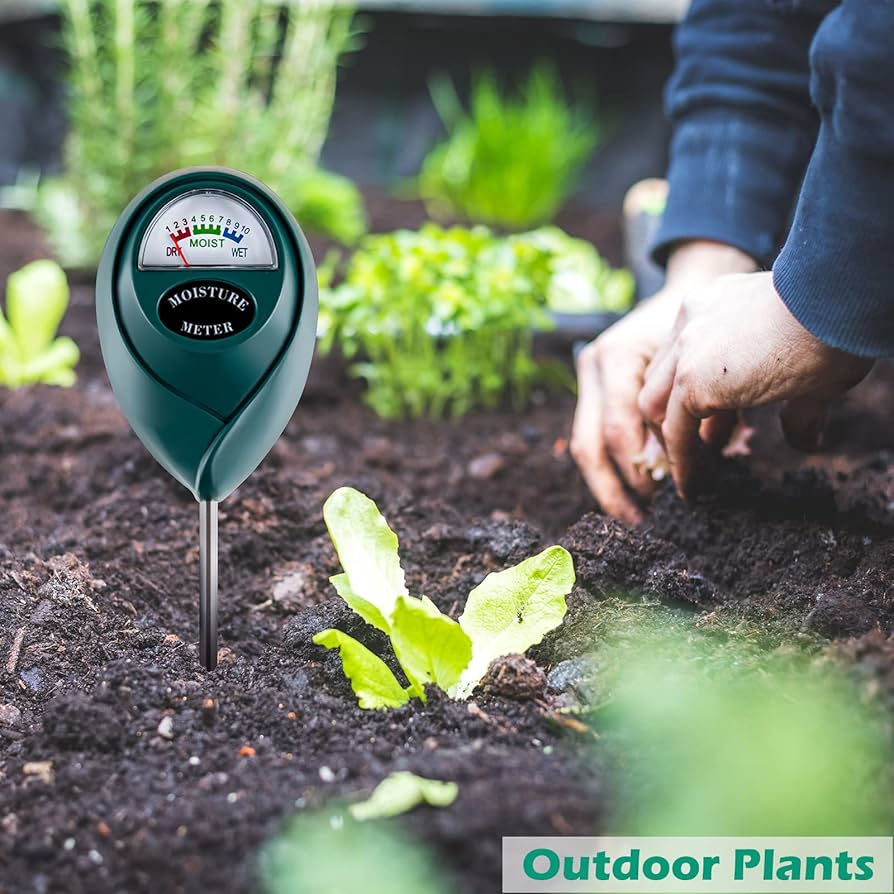
A soil moisture probe bypasses the surface layer entirely. It slides deep into the pot, giving you an instantaneous, accurate readout of the exact moisture percentage surrounding the lower root hairs. By using a meter, you avoid the devastating cycle of chronic overwatering, significantly reduce your chances of dealing with annoying fungus gnat outbreaks, and give your plants the exact balance of air and water they need to push out massive new leaves.
The Different Types of Soil Moisture Testers
Not all plant sensors are created equal. When you start shopping around, you will generally run into three main categories of meters. Understanding how they operate will help you choose the best fit for your specific lifestyle and budget.
1. Analog Single-Probe Meters (The Budget Champion)
These are the most common mechanical indicators you see all over social media. They feature a single metallic probe attached to a physical display dial that ranks moisture on a scale from 1 (bone dry) to 10 (soaking wet). The best part? They run entirely on static electricity and chemical reactions between the metal probe and the soil minerals. They require zero batteries, making them incredibly reliable and cheap.
2. 3-in-1 Environmental Gauges
If you want to maximize your budget, a 3-in-1 multi-functional tester is an excellent choice. These devices include a toggle switch that allows you to read soil moisture, soil pH levels, and even the relative sunlight intensity hitting that specific corner of your room. It is a fantastic option if your trying to figure out if your Monstera is actually getting bright, indirect light or if your soil is becoming too acidic.
3. Digital and Smart Bluetooth Sensors
For the tech-loving plant parent, digital smart probes stay buried directly inside your most prized plant pots. They continuously monitor moisture, temperature, and nutrient levels, syncing the data straight to an app on your smartphone. The app will send a notification to your phone saying, “Your Calathea is thirsty!” While they are more expensive and require batteries, they offer unmatched peace of mind if you travel frequently.
Moisture Meter Comparison Chart
To help you decide which tool deserves a spot in your gardening toolkit, let’s look at how these three main types stack up against each other.
| Meter Type | Power Source | Best Used For | Pros | Cons |
| Analog Single-Probe | None (Self-powered) | Checking large collections quickly | Affordable, no batteries, very simple | Must be removed after every single use |
| 3-in-1 Multi-Tester | None (Self-powered) | Diagnosing light and soil pH issues | Versatile, great value, easy to read | Larger probe tips can disturb small roots |
| Digital Smart Sensor | Lithium Batteries | Rare, dramatic, or high-value plants | Real-time smartphone alerts, data tracking | Expensive, requires battery replacements |
Step-by-Step Guide to Using a Moisture Meter Accurately
Once you purchase the best moisture meter for indoor plants, you need to know how to operate it correctly. A lot of beginners think you just stick it in the mud and read the number, but improper use can damage the device or give you highly inaccurate readings. Follow this step-by-step guide to get perfect results every time.
Step 1: Clean and Prep the Probe
Before inserting the metal rod into your soil mix, take a clean cloth or paper towel and wipe down the metal tip. Any lingering dirt, rust, or mineral crust from a previous test can mess with the electrical conductivity, leading to an incorrect readout. Never submerge the meter head in a glass of water to test it; these devices are designed to measure soil density and moisture, not pure liquid.
Step 2: Choose Your Testing Zones
Do not just stab the probe into the exact center of the plant base. For an accurate picture of the pot’s hydration status, you want to test a few different spots. Aim for a zone midway between the main plant stem and the inside rim of the container.
Step 3: Insert the Probe to the Proper Depth
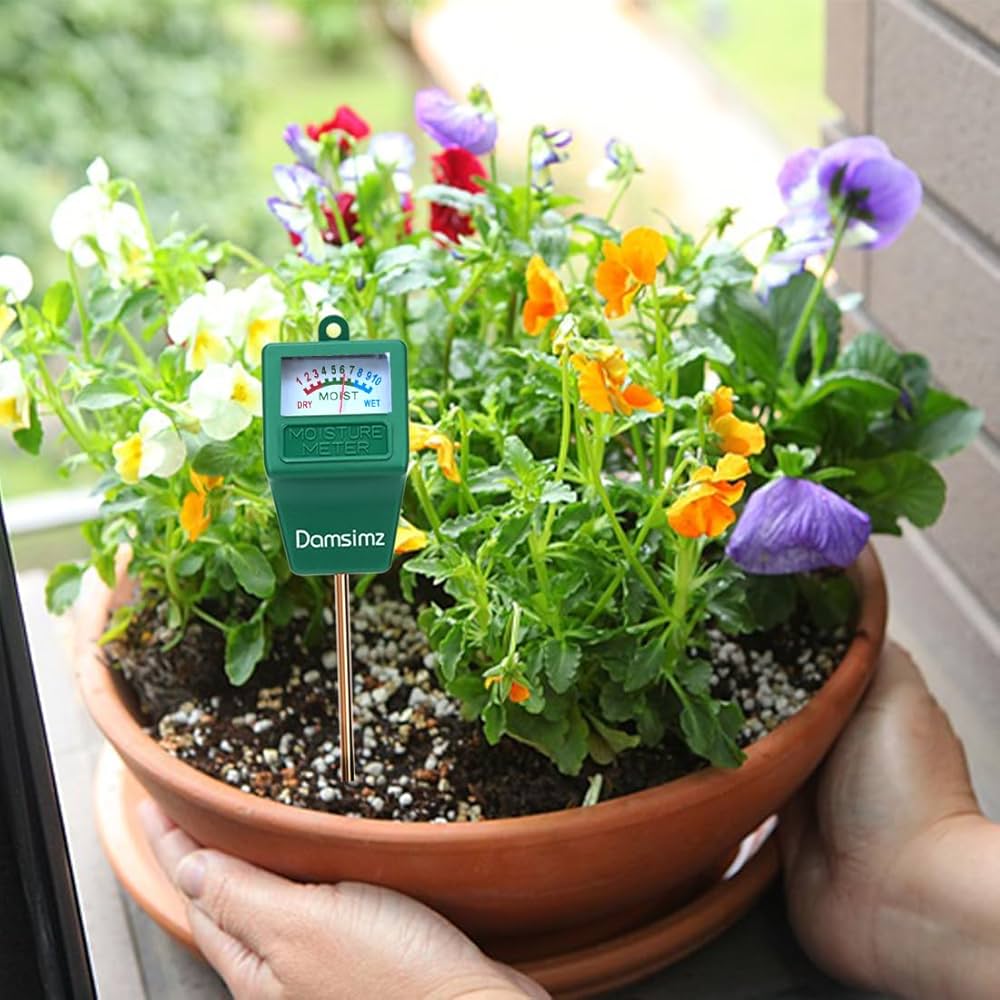
Gently push the metal shaft down into the substrate. For small 4-to-6-inch pots, go down about halfway. For massive floor planters housing your Fiddle Leaf Fig or Bird of Paradise, push the probe down until it is about two-thirds of the way deep. If you hit a thick root or a piece of chunky orchid bark, don’t force it. Pull back slightly and try a different angle to avoid snaping the roots.
Step 4: Read the Dial and Take Action
Leave the meter in place for about ten seconds until the needle stops moving. Most analog dials are color-coded for ease of use:
- Red Zone (1-3): Bone dry. Your plant is parched and needs a thorough soaking immediately.
- Green Zone (4-7): Perfectly moist. This is the sweet spot for most active tropical plants. Do not add water.
- Blue Zone (8-10): Waterlogged. The soil is saturated. If it stays in this zone for too long, your risking root rot.
Step 5: Remove and Clean Immediately
This is the most crucial rule of manual soil gauges: never leave an analog moisture meter sitting in a pot of dirt permanently. The constant exposure to wet soil minerals and salts will corrode the sensitive metal tip, rendering the sensor completely useless within a few weeks. Pull the meter out, wipe it clean with a dry towel, and store it in a dry drawer until your next watering day.
How Your Soil Mix Affects Meter Readings
Here is a bit of insider expert knowledge: the type of potting medium your plant lives in can change how your meter behaves. Moisture meters measure electrical conductivity, which means they read how easily an electrical current passes through the soil.
If your collection is potted in a highly aerated, chunky aroid mix filled with large pieces of perlite, pumice, and orchid bark, the meter might give you a slightly lower reading than reality because of the large pockets of air. On the other hand, if you are using a heavy, peat-based soil with a high concentration of synthetic fertilisar salts, the needle might jump all the way to the blue zone even if the soil is only moderately damp. Always combine your meter readings with a quick physical check of the foliage to ensure your making the right decision.
Achieve a Thriving Green Space with LeafCare
At LeafCare.xyz, we believe that anyone can develop a confident green thumb when given the right tools and supportive, judgment-free guidance. Embracing a soil moisture probe takes away the stress of plant parenting, turning your weekly watering chores into a simple, predictable, and highly successful routine.
Whenever your facing a crispy leaf edge, a weird bug situation, or a lighting dilemma, let LeafCare.xyz be your ultimate online greenhouse guide. We are always here to help you navigate your indoor gardening journey with absolute confidence.
Do you use a moisture meter for your houseplants? Drop a comment below and let us know which model is your absolute favorite, or ask us any questions about your trickiest plants—we answer every single comment! Don’t forget to bookmark LeafCare.xyz and subscribe to our newsletter for a weekly dose of practical, expert-led indoor plant hacks sent straight to your inbox.
