Learn how to clean dust off indoor plant leaves safely. Discover the best tools, step-by-step methods, and myths to avoid for a healthy green glow!
How to Clean Dust Off Indoor Plant Leaves: The Ultimate Guide to Restoring Your Plant’s Glow
Take a close look at your favorite monstera, fiddle leaf fig, or peace lily right now. Does it have that crisp, glossy, camera-ready shine it had when you first brought it home from the nursery? Or is it looking a little dull, matte, and covered in a fine layer of grey household grime?
If your plants are looking a bit dusty, don’t worry. It happens to the best of us. In our apartments and homes, dust is an inevitable part of life. It’s a mix of pet dander, fabric fibers, and dead skin cells settling on every flat surface—including your plant’s gorgeous foliage.
Look, I get it, plant care can be frustrating but cleaning your plants often feels like just another tedious chore on your weekend to-do list. Here is the real talk: learning how to clean dust off indoor plant leaves isn’t just about making your apartment look highly aesthetic for your next grid post. It is a fundamental requirement for your plant’s physical survival.
As a senior indoor gardening expert here at LeafCare.xyz, I have wiped down miles of foliage. Today, we are breaking down why dust is your plant’s silent enemy and showing you exactly how to clean dust off indoor plant leaves without damaging their delicate surfaces.
Why Dusty Leaves are Softly Suffocating Your Plant
In the wild, plants have access to a natural, high-powered cleaning service: wind and rain. A heavy tropical downpour instantly washes away dirt, pollen, and debris from the jungle canopy. Indoors, our plants are completely trapped.
When a thick layer of dust builds up on a leaf, it acts exactly like a heavy set of blackout curtains. It blocks sunlight from reaching the chloroplasts inside the cells, which drastically cuts down your plant’s ability to photosynthesize. Photosynthesis is the exact biological proccess your plant uses to turn light into food. Less food means slower growth, smaller leaves, and an overall weak, sad-looking plant.
Furthermore, plants breathe through tiny, microscopic pores on their leaves called stomata. If these stomata are completely choked out by dust and pet dander, the plant cannot properly exchange gasses or transpire moisture. This stresses the plant out, making it way more vulnerable to root rot and nasty pest infestations.
The Plant Cleaning Method Dashboard: Which Tool is Best?
Different plants have entirely different leaf textures. You can’t clean a fuzzy calathea the same way you clean a massive, smooth rubber plant. Use this quick summary table to match the right cleaning method to your specific green baby.
| Cleaning Tool / Method | Best Suited For | Pros | Cons / Risks |
| Damp Microfiber Cloth | Large, smooth leaves (Monstera, Fiddle Leaf Fig, Rubber Plant) | Highly precise, removes heavy buildup instantly | Tedious for small plants; can tear leaves if your too aggressive |
| The Sink / Shower Rinse | Small, dense foliage (Pothos, Ferns, Ivy, Spider Plants) | Fast, mimics natural rain, flushes the soil | Can drown roots if drainage is poor; messy |
| Soft Bristle Brush / Feather Duster | Fuzzy or textured leaves (African Violets, Calatheas) | Zero water risk, gentle on delicate hairs | Doesn’t remove sticky residues or heavy grime |
| Mild Soap Solution | Plants with stubborn grease, grime, or minor pests | Deep cleans, leaves a natural shine, deters bugs | Can cause chemical burn if the solution is too strong |
Step-by-Step Guide to Cleaning Your Indoor Plant Leaves
Ready to restore that emerald brilliance? Follow this detailed step-by-step proccess to clean your plants like an absolute pro without causing any structural damage to the foliage.
Step 1: Prep Your Cleaning Solution
For 90% of your cleaning routines, plain lukewarm water is all you need. Never use ice-cold or piping-hot water, as extreme temperatures can shock the plant’s cells and cause unsightly spots. If your leaves have stubborn water spots or greasy film from being near a kitchen window, mix a few drops of mild, organic castile soap into a quart of warm water.
Step 2: Support the Leaf from Beneath
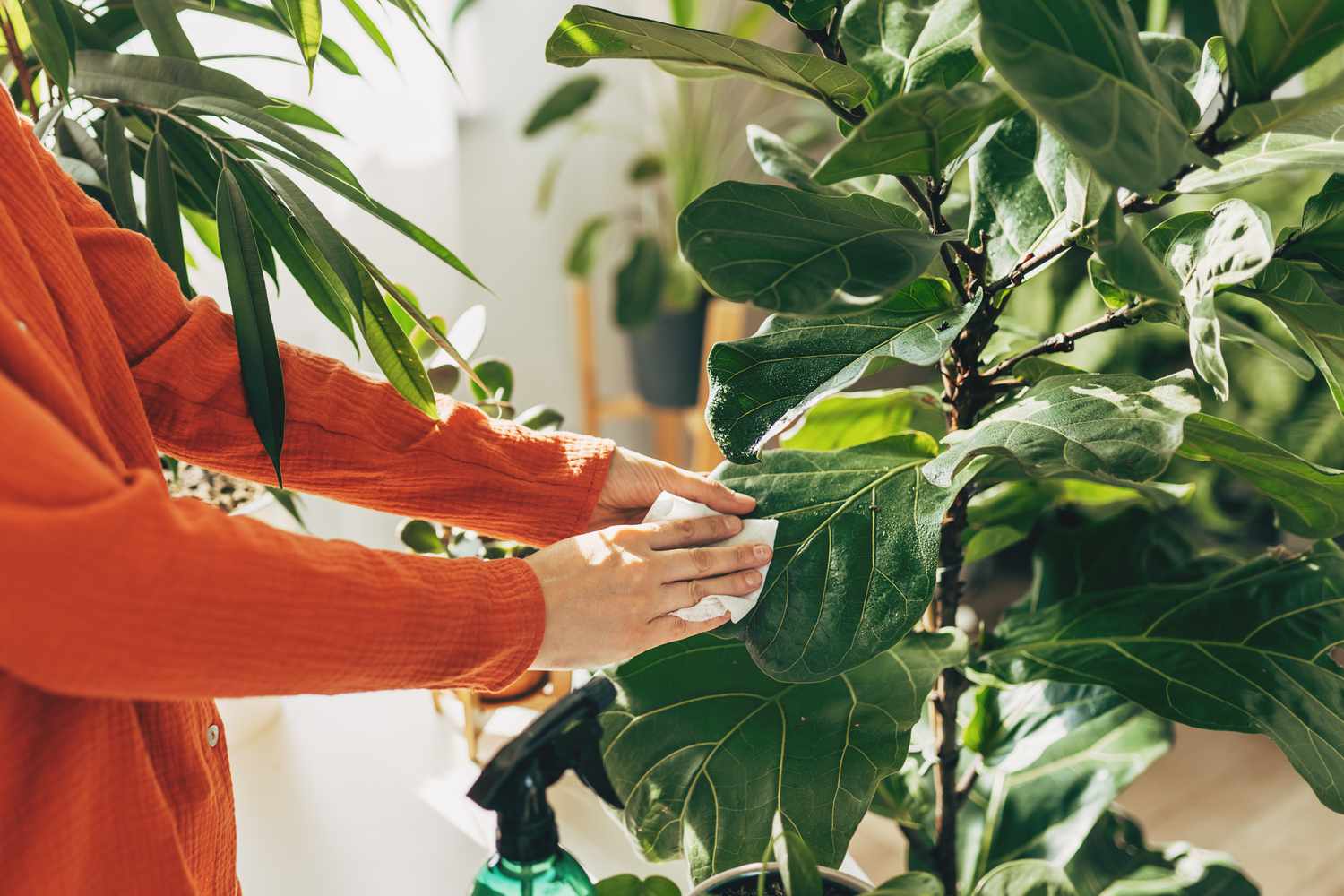
This is where many beginner plant parents accidentally break their plant’s stems. Never just wipe down a leaf from the top while it’s hanging in mid-air. Always place one hand flat under the leaf to support its weight, and use your other hand to gently slide your damp cloth or sponge from the base of the leaf outward to the tip.
Step 3: Don’t Forget the Undersides
While dust settles on the top of the leaf, sneaky pests like spider mites, thrips, and mealybugs love to hide out on the bottom. While your doing your cleaning routine, flip the leaf over and give the underside a gentle wipe too. This lets you catch any early pest infestations before they turn into an absolute nightmare for your entire collection.
Step 4: Let It Dry Safely
Once your plant is clean, let it air dry in a well-ventilated spot. Avoid placing a wet plant back into direct, intense sunlight, as the water droplets can act like tiny magnifying glasses, focusing the sun’s rays and burning holes right through the foliage.
Crucial Plant Cleaning Myths to Avoid
When your looking up how to clean dust off indoor plant leaves, you will run into some truly terrible internet advice. Let’s bust a couple of the most dangerous myths floating around online plant forums.
The Mayonnaise and Olive Oil Disaster
You will see old-school gardening blogs recommending that you rub mayonnaise, olive oil, or commercial milk products onto your plant leaves to give them an intense, artificial shine. Please, do not do this.
While it looks incredibly glossy for the first ten minutes, oil and dairy leave a thick, sticky residue behind. This residue completely clogs the plant’s breathing stomata, and it acts like a literal magnet for household dust. Even worse, that old oil will break down, turning rancid and attracting pests like gnats and fruit flies into your living space.
The Commercial Leaf-Shine Trap
Many big-box nurseries sell aerosol cans of chemical leaf-shine spray. While these are okay for temporary floral arrangements that are meant to be thrown away, they are awful for long-term houseplant care. They contain synthetic polymers that block the leaves from breathing properly. Stick to pure, clean water and a high-quality microfiber cloth—nature doesn’t need chemicals to look beautiful.
Long-Term Dust Management Hacks
If you want to reduce how often you have to complete this whole proccess, you can make a few quick tweaks to your indoor environment.
Run an Air Purifier Near Your Green Space
Investing in a small HEPA air purifier for your main plant room is a massive game-changer. It pulls dust, pet dander, and mold spores out of the air before they ever get a chance to land on your lush green canopy. Your lungs will thank you, and your plants will too.
Give Your Plants a Regular Shower Day
Once every two months, gather your moisture-loving trailing plants—like pothos and philodendrons—and put them right into the bathtub or shower. Give them a gentle spray with a lukewarm showerhead for a few minutes. This washes away any minor dust accumulation and gives the soil a fantastic, deep drenching at the same time. Just make sure to let them drain completely before putting them back in their decorative pots.
Feed and Protect
When your leaves are clean, they can absorb light more efficiently, meaning they will grow much faster during the spring and summer. This is the perfect time to add a gentle, organic fertilisar to your routine to maximize that new growth.
Keep Your Indoor Jungle Shining
At the end of the day, learning how to clean dust off indoor plant leaves is one of the simplest acts of love you can show your indoor garden. It’s a peaceful, grounding routine that connects you directly with your plants, giving you a chance to inspect their health up close while keeping your space looking beautifully vibrant.
Whenever you feel stuck, notice a strange spot on a leaf, or need help picking your next low-maintenance green roommate, remember that LeafCare.xyz is your go-to resource for indoor plant parents looking to grow a thriving green space at home. We believe that plant care should be a relaxing journey, not a stressful chore.
If this dusting guide helped restore your jungle’s beautiful shine, make sure to bookmark LeafCare.xyz so you can reference our care summaries whenever your doing your weekend cleaning rounds. Want a weekly delivery of practical, non-judgmental plant care tips, easy propagation hacks, and styling ideas straight to your inbox? Subscribe to our newsletter today! If your currently looking at a finicky plant and trying to figure out the safest way to clean its delicate leaves, drop a comment below with your plant types, and let’s figure it out together!
